
Wholesale VoIP Termination & Origination
Premium USA & Canada voice routes for carriers, resellers, and ITSPs. Comprehensive local and toll-free DID coverage with rapid provisioning.
Our wholesale voice infrastructure is designed for extreme resilience, delivering secure, highly-available SIP trunking across distributed geographic regions. We construct our network to eliminate single points of failure, ensuring your traffic reaches its destination cleanly under demanding operational conditions.
Distributed Points of Presence
Geographically distributed points of presence with multiple independent facilities. Engineered to ensure no localized or facility-level fault can impact global routing capabilities.
Tier-1 Carrier Interconnection
Direct interconnects with premium PSTN operators rather than fragmented reseller chains. Multiple redundant upstream routes are aggressively configured per destination.
Redundant Route Selection
Advanced least-cost and highest-quality routing algorithms. Automatic health monitoring triggers seamless re-routing on 503 or timeout conditions without manual intervention.
Media Path Design
Robust media handling engineered to preserve active calls even during localized control-plane faults. Full support for SRTP-capable edge encryption ensuring payload security.
Real-Time NOC Oversight
Continuous 24/7 network operations center oversight. Proactive monitoring of SIP telemetry, route quality, and conversational benchmarks to maintain reliability.
Capacity Engineering
Dedicated capacity provisioning designed for burst and high-velocity dialer traffic. CPS and concurrent channel thresholds are precisely sized to your specific operational profile.
US & Canada Coverage
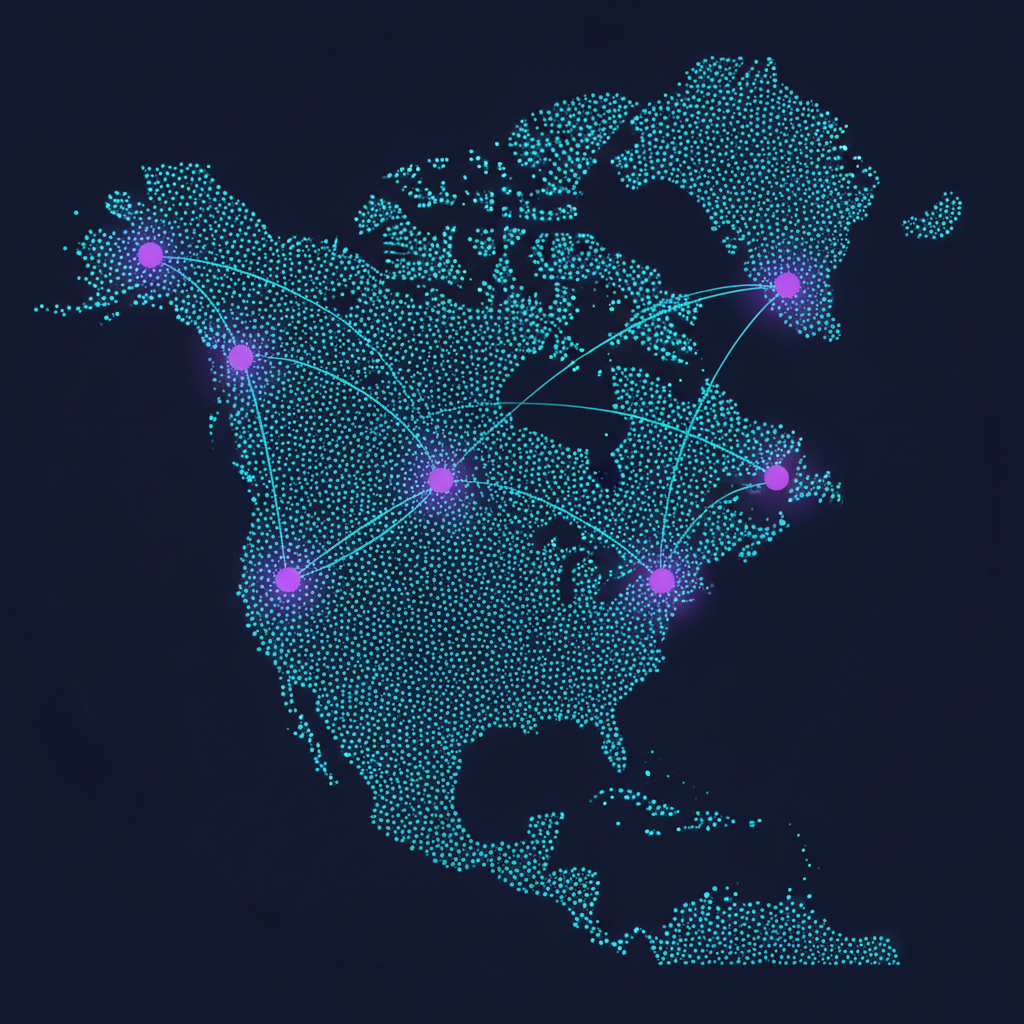
Extensive footprint across primary and secondary rate centers nationwide. We provide instant provisioning for local DIDs and toll-free numbers across all 50 US states and Canada, ensuring rapid deployment and seamless LNP porting capabilities.
International Origination
For international carriers terminating traffic into North America, we provide pristine A-Z delivery. Our edge SBCs enforce strict compliance with US Robocall Mitigation standards, protecting your traffic from aggressive downstream analytics filtering.
Built for Voice Professionals
We provide the carrier-grade foundation for providers who demand reliability.
ITSPs & Hosted PBX Providers
Tired of margin compression and unreliable upstream routes affecting your customers?
- Brandable rate decks
- Sub-account billing structures
- High-availability SIP trunks
VoIP Resellers & Partners
Need a compliant, attesting US termination partner to grow your business?
- A-level STIR/SHAKEN attestation (verified numbers)
- Robocall mitigation compliance
- Automated DID provisioning
International Carriers
Struggling to find reliable, high-ASR termination into US & Canada markets?
- Direct Tier-1 interconnects
- Premium CLI delivery
- 24/7 route monitoring
Wholesale Voice Services
Comprehensive carrier-grade voice solutions for your network.
VoIP Termination
High-quality USA & Canada A-Z termination with intelligent routing, LCR, and failover for maximum ASR.
- US & Canada A-Z routing
- LCR with automatic failover
- Per-route ASR/ACD monitoring
- Interstate, intrastate, & toll-free
Origination & DIDs
Local and toll-free US DIDs from $0.50. Instant provisioning and number porting.
- Local & Toll-Free numbers
- API-driven provisioning
- Rapid LOA porting support
- E911 and CNAM capable
Carrier Interconnect
SIP peering for carriers, resellers, and service providers. Real-time CDR analytics and reporting.
- SIP over UDP/TCP/TLS
- IP & SIP Digest auth
- Sub-account billing control
- Real-time active call tracing
Intelligent Routing Architecture
Built to guarantee call delivery through multi-layered redundancy and real-time health checks.
Least-Cost Routing (LCR)
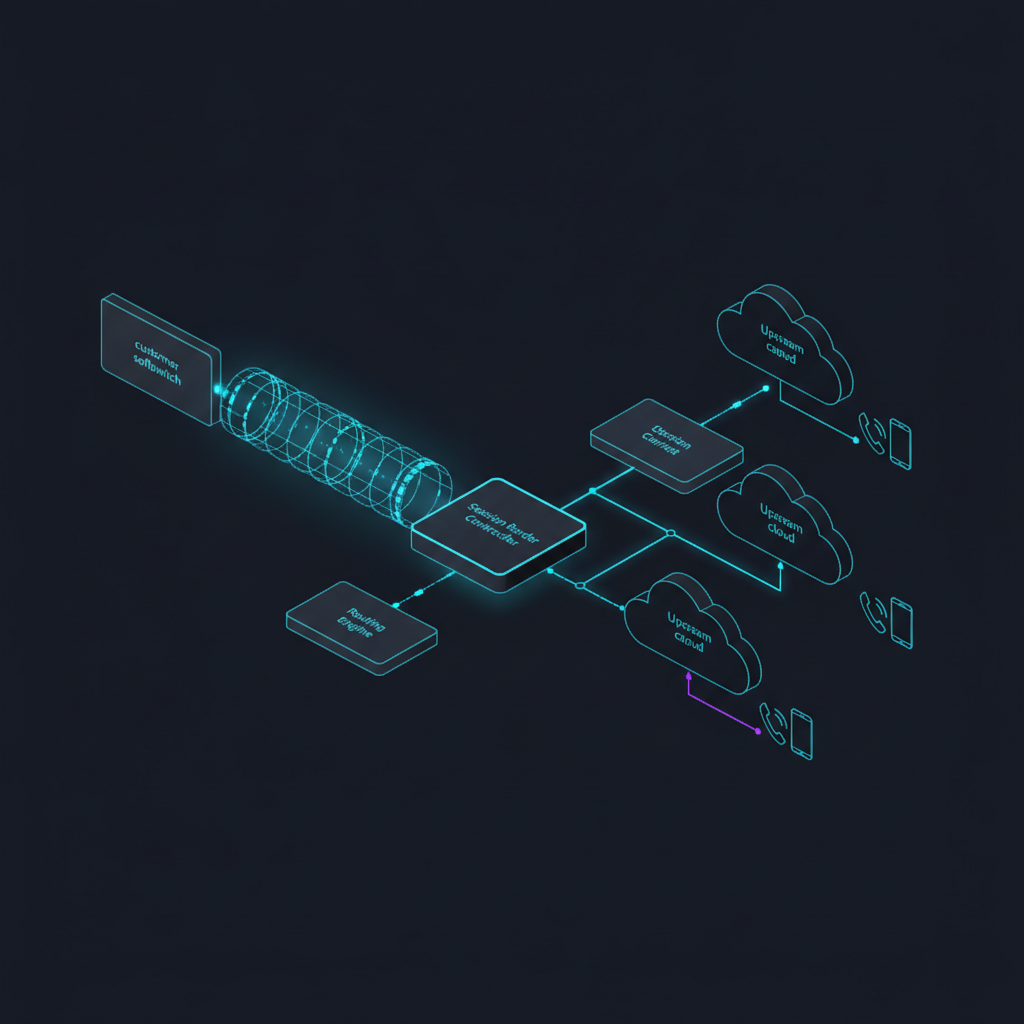
Calls are dynamically routed based on a continuous analysis of quality and cost across multiple Tier-1 upstream providers.
Real-Time Route Health
Our SBCs monitor ASR, ACD, and PDD in real-time. If a route degrades, traffic is immediately shifted to maintain quality.
Automatic Failover
If a primary carrier fails to complete a call (e.g., 503 Service Unavailable), our engine transparently attempts the next best route.
STIR/SHAKEN Attestation
In North America, every call carries a signed identity token. The attestation level attached to your traffic by the originating provider directly influences whether it is delivered cleanly, labeled as spam, or filtered entirely by downstream carriers.

Full Attestation
Trigger: Originating provider has a direct authenticated relationship with the customer AND has verified the customer's right to use the calling number.
Meaning: The provider vouches for both the caller's identity and their authorization to use the caller ID.
Impact: Highest downstream trust; yields the best terminating-carrier treatment, lowest spam scoring, and highest answer rates.
Partial Attestation
Trigger: Provider has a direct authenticated relationship with the customer but has NOT verified the customer's right to use that particular calling number.
Meaning: The identity of the caller is known, but number ownership is unverified.
Impact: Analytics engines treat B-level attestation as materially less trustworthy. This commonly correlates with reduced answer rates and increased spam labeling. This is the typical outcome when traffic passes through an unverified reseller chain.
Gateway Attestation
Trigger: Provider originated the call onto its network but cannot authenticate the call source (e.g., an international gateway or legacy TDM interconnect).
Meaning: The provider is essentially making no vouching claim regarding the caller or the number.
Impact: Lowest trust; frequently filtered, dropped, or immediately labeled as 'Spam Risk' by carrier analytics.
The Identity Header
When a call is signed using STIR/SHAKEN, a SIP Identity header is injected into the INVITE. The terminating carrier parses this header, fetches the public certificate via the URL in the 'info' parameter, and verifies the ECDSA signature over the PASSporT (Personal Assertion Token) payload to validate the attestation claim before routing the call to the handset.
Identity: "eyJhbGciOiJFUzI1NiIsInBwdCI6InNoYWtlbiIsInR5cCI6InBhc3Nwb3J0In0.eyJhdHRlc3QiOiJBIiwiZGVzdCI6eyJ0bmMiOlsiKzExMjM0NTY3ODkwIl19LCJpYXQiOjE2MjI1NTE4MTEsIm9yaWciOnsidG5jIjpbIisxMDk4NzY1NDMyMSJdfSwib3JpZ2lkIjoiMTIzZS00NTY3LWUzOGItNGRmNyJ9.e8k_X3...sig";info=<https://cert.example-sti-auth.net/sp.pem>;alg=ES256;ppt=shaken- eyJhbGciOi...The base64-encoded PASSporT JWT containing the claimed attestation level (e.g., 'A'), origin number, destination number, timestamp, and the cryptographic signature.
- info=<...sp.pem>The URI where the terminating carrier can retrieve the signing provider's X.509 public key certificate to verify the signature.
- ppt=shakenIndicates the PASSporT extension type is SHAKEN, adhering to the specific telecom identity framework rather than generic SIP identity.
- alg=ES256Specifies the ECDSA P-256 signing algorithm used to generate the signature.
The Call Path Matters
Attestation is severely compromised when originating traffic passes through unverified reseller chains before being signed.
Direct Wholesale Integration
Clean routing, high answer rates, carrier trust maintained.
Multi-Hop Reseller Chain
Signing entity has no authenticated relationship with the true originator. Call is downgraded, increasing the likelihood of spam blocking or rejection.
The VirPhone Advantage
VirPhone originates and signs traffic under its own FCC filing and robust robocall mitigation program rather than relying on a fragmented reseller chain. Because we control the edge, we can apply full A-level attestation to your traffic when calling-number right-to-use is verified.
Nationwide Coverage & Route Classes
Extensive footprint across primary rate centers with distinct quality profiles.
| Route Class | Best For | Quality Profile |
|---|---|---|
| Platinum | Retail / PBX / Business Traffic | Highest ASR, guaranteed CLI delivery, premium routes. |
| Gold | Balanced Wholesale | Standard CLI, optimal balance of cost and completion rate. |
| Silver | High-Volume Cost-Optimized | Aggressive LCR routing for compliant high-volume dialers. |
Rates & Billing Mechanics
In wholesale voice, effective cost per minute is driven as much by billing increments, rounding, and jurisdictional realities as by the headline rate. We price cleanly and transparently.

| Commit Tier | Monthly Minutes | Ideal Profile |
|---|---|---|
| Starter | Under 100K | New ITSPs, PoC deployments, and low-volume SMB aggregators. |
| Growth | 100K – 500K | Scaling VoIP resellers and mid-market PBX hosters. |
| Scale | 500K – 1M | Established regional providers and moderate contact centers. |
| Volume | 1M – 5M | High-volume SIP trunking platforms and BPO call centers. |
| Enterprise | 5M – 10M | Large dialer operators, CPaaS platforms, and national aggregators. |
| Carrier | 10M+ | Direct carrier interconnects and international PTT operators. |
Starter
Growth
Scale
Volume
Enterprise
Carrier
Note: These volume tiers represent indicative banding for commercial routing. Actual rates are issued as a custom rate deck following a comprehensive traffic profile review. Pricing varies significantly by destination mix, jurisdiction (interstate vs intrastate), and traffic quality.
Billing Increments
Wholesale billing relies on initial and subsequent duration increments. A 60/60 notation means a 60-second minimum charge with 60-second increments thereafter. A 6/6 notation (standard for conversational wholesale) means a 6-second initial duration with 6-second increments. A 6/6 structure materially lowers the effective per-minute cost on short-duration calls compared to 60/60 rounding.
Connected Minutes Only
Wholesale rating strictly applies to connected minutes (SIP 200 OK followed by an ACK). There is no charge for busy (486), no-answer (408), invalid (404), or failed/rejected attempts, meaning PDD and ring time do not accrue billing.
Jurisdictional Rating
Rates are determined based on the jurisdiction of the calling (ANI) and called (DNIS) numbers. Intrastate calls (originating and terminating within the same state) are typically priced higher than interstate calls due to legacy local exchange access charges and tariff structures.
Rate Centers and LATAs
A Rate Center is a geographical area defining local calling boundaries and DID assignment. Local Access and Transport Areas (LATAs) are larger regional boundaries. DID availability, jurisdiction, and LNP routing depend heavily on precise rate center matching.
Toll-Free / 8YY Billing
Unlike outbound conversational traffic, inbound toll-free traffic shifts the cost burden. The owner of the toll-free number pays the per-minute inbound termination cost, plus potential originating carrier payphone compensations.
Rounding and Rating Aggregation
Calculations occur at the individual CDR level, rounding the call duration up to the nearest increment, computing the fractional cent cost, and extending it out. Total amounts are aggregated and rounded to standard currency only at the billing cycle level.
Deposits and Terms
Standard wholesale interconnects operate on a prepaid basis utilizing a declining balance and auto-recharge thresholds to prevent service interruption. Approved enterprise platforms demonstrating consistent history may transition to postpaid net terms following financial underwriting.
Rates & Rate Decks
Custom rate decks are issued per partner following a comprehensive traffic profile review. Pricing is based on destination mix, volume, and traffic quality.
| Service | Pricing Structure | Notes |
|---|---|---|
| US Interstate Termination | Per-minute, 6/6 rounding | Tiered discounts available for clean traffic profiles. |
| US Intrastate Termination | Per-minute, 6/6 rounding | Varies significantly by specific rate center. |
| Canada Termination | Per-minute, 6/6 rounding | Premium routes covering all provinces. |
| US Toll-Free Origination | Per-minute | Reliable inbound toll-free routing. |
| Local DID | Monthly Recurring (MRC) | Volume discounts available for large blocks. |
| Toll-Free DID | Monthly Recurring (MRC) | Vanity numbers available upon request. |
| Inbound DID Per-Minute | Per-minute inbound leg | Metered inbound legs on local DIDs. |
Flexible Terms
Start with a prepaid auto-recharge balance. Approved enterprise customers can transition to net payment terms.
Volume Tiers
Unlock aggressive custom rate decks by committing to monthly minimum volumes or revenue targets.
No Hidden Fees
Transparent billing with no artificial per-channel minimums or hidden connectivity surcharges.
The Number Lifecycle
From instant DID provisioning to complex multi-site porting logic, mastering the origination lifecycle prevents downtime and routing failures.

DID Ordering and Rate Centers
Direct Inward Dialing (DID) numbers are provisioned from specific Rate Centers. Availability is constrained by local NPA-NXX exhaustion. Sequential blocks are available but increasingly scarce in dense urban LATAs.
Porting Mechanics (LNP)
Local Number Portability requires a Letter of Agency (LOA) matching the Customer Service Record (CSR) exactly. Once approved, a Firm Order Commitment (FOC) date is set. Common rejections stem from name/address mismatches, pending orders, or accounts in arrears.
- Name or address mismatches against the CSR
- Pending or overlapping port orders
- Frozen accounts or accounts in arrears
LRN Dipping
Because numbers can port, the dialed digits rarely indicate the physical switch. Switches perform a Location Routing Number (LRN) dip against the regional database to determine the actual terminating carrier switch before routing the call.
CNAM Storage vs Dip
CNAM is not transmitted in the SIP INVITE. The originating provider updates the CNAM Storage database (LIDB) with the caller's name. The terminating provider performs a CNAM Dip against that database to display it to the called party. Dips incur a fractional per-query charge.
Toll-Free and RespOrg
Toll-free routing is controlled by a Responsible Organization (RespOrg). The SMS/800 database directs how an 8YY call routes. Pointing a toll-free number to a new carrier requires a RespOrg change, not a standard LNP port.
E911 Provisioning
Compliance mandates that interconnected VoIP numbers be provisioned with validated E911 dispatch addresses. Nomadic users must utilize dynamic location routing protocols to update the PSAP database when their physical IP location shifts.
| Codec | Raw Bitrate | Bandwidth (w/ IP Overhead) | Typical MOS | Engineering Notes |
|---|---|---|---|---|
| G.711 μ-law | 64 kbps | ~87 kbps | ~4.2 | North American PSTN default. Uncompressed, high quality, requires no transcoding penalty. Standard payload payload type 0. |
| G.711 A-law | 64 kbps | ~87 kbps | ~4.2 | European and international PSTN default. Functionally identical to μ-law in overhead. Standard payload type 8. |
| G.729 / G.729a | 8 kbps | ~32 kbps | ~3.9 | Highly compressed, traditionally licensed codec. Useful on severely constrained links but adds DSP transcoding load at the SBC. |
| G.722 | 64 kbps | ~87 kbps | ~4.5 | Wideband HD audio. Excellent for intra-network SIP calls but is fundamentally not carried across standard PSTN TDM links. |
| Opus | 6–510 kbps | ~40–100 kbps | ~4.5+ | Modern variable-bitrate WebRTC codec. Exceptionally resilient to packet loss, but always requires transcoding for final PSTN delivery. |
Codec Negotiation (SDP)
Codecs are negotiated via the Session Description Protocol (SDP) offer/answer model within the SIP INVITE. Aligning your equipment's offer order with the upstream carrier's preferred codec (typically G.711u) avoids unnecessary transcoding, thereby preserving MOS and reducing latency.
Transcoding Implications
Transcoding between disjointed codecs (e.g., G.729 to G.711) requires DSP resources, inherently introduces a 10-30ms processing delay, and permanently degrades the Mean Opinion Score (MOS) of the audio stream due to re-quantization.
RTP vs SRTP
Standard RTP transmits audio as unencrypted UDP packets. Secure RTP (SRTP) encrypts the payload using AES. However, SRTP key exchange occurs in the SDP; therefore, SRTP is only meaningfully secure if the signaling channel itself is encrypted (SIP over TLS).
DTMF Transport
DTMF should be transported out-of-band using RFC 2833 / 4733 (telephone-event) or SIP INFO. In-band audio DTMF relies on raw frequencies, which are irreparably distorted and rendered unrecognizable by compressed codecs like G.729.
T.38 vs G.711 Pass-Through
Fax transmission requires pure, lossless transit. T.38 (Fax Relay) converts fax tones into a data protocol over IP, providing reliability. Alternatively, G.711 pass-through can work on pristine connections but mandates turning off echo cancellation and VAD. Fax definitively fails over compressed G.729 links.
Jitter, Packet Loss, and Latency Targets
To maintain toll-quality voice, wholesale IP links must adhere to strict thresholds: one-way latency below 150ms (ITU G.114), jitter under 30ms, and packet loss rigorously maintained below 1%.
Supported Platforms
Our SIP interconnects adhere strictly to RFC 3261 standards, ensuring seamless compatibility with major softswitches, SBCs, and enterprise PBXs.
Asterisk
Standard deployment utilizes the PJSIP channel driver. Trunks require correctly defining the endpoint, aor, and identify sections for IP authentication to map inbound routing.
FreePBX
Configure PJSIP trunks with 'Authentication' set to 'None' for IP-based ACL trunking. Define inbound routes matching the exact DID format passed by the carrier.
Kamailio
Employed as a high-performance edge proxy and load balancer. Integrates directly with carrier gateways via the dispatcher module for LCR and failover.
3CX
Typically deployed using template-driven SIP trunk configurations. Requires strict alignment of the E.164 outbound caller ID rules within the 3CX management console.
NetSapiens
Multi-tenant UCaaS platform. Interconnects via SIP signaling gateways, relying heavily on proper domain mapping and translation rules for LNP routing.
VICIdial
High-volume dialer platform. Carrier settings must include explicit dialplan definitions and account entries, carefully throttling the 'Max VICIdial Trunks' to prevent 503 CPS drops.
SBC (AudioCodes / Ribbon)
Enterprise edge demarcation. Normalizes SIP headers, strips internal topology, and handles media transcoding and RTP anchoring before interacting with wholesale trunks.
Likely Causes
NAT translating the SDP connection data improperly, RTP port range mismatch, firewall blocking UDP media traffic, or SIP ALG interfering with headers.
Resolution
Ensure your PBX's external IP is correctly mapped in the SIP config. Open the full negotiated RTP port range on edge firewalls. Explicitly disable SIP ALG on the edge router.
Likely Causes
Consumer routers or firewalls (e.g., FortiGate, pfSense, Netgear, UniFi) attempting to 'helpfully' rewrite SIP and SDP packets but corrupting the payloads.
Resolution
Disable the SIP ALG/Helper service on the firewall. Alternatively, shift signaling to SIP over TLS, which encrypts the payload and prevents ALG inspection.
Likely Causes
The source IP of the PBX is not whitelisted, the outbound Caller ID is unauthorized/spoofed, or the destination rate center is disabled in the ACL.
Resolution
Verify the PBX is sending from the correct WAN IP. Ensure the Caller ID matches an owned DID. Check international or premium-rate dialing permissions.
Likely Causes
Dial string format mismatch. Typically, the PBX is sending local 7-digit or 10-digit formats without the required E.164 country code.
Resolution
Adjust the PBX dial plan / outbound route rules to prepend '+1' to 10-digit North American numbers before passing to the wholesale trunk.
Likely Causes
Excessive LRN dip latency, complex multi-hop route hunting, or failed upstream carriers timing out before falling back to subsequent routes.
Resolution
Investigate SIP trace for delayed 100 Trying or 183 Session Progress responses. Review LRN provider response times. Simplify upstream LCR tables.
Likely Causes
Network packet loss, high jitter, or insufficient upstream bandwidth on the local internet circuit.
Resolution
Implement Quality of Service (QoS) tagging (DSCP 46/EF) on the LAN. Run sustained ping/MTR tests to the upstream gateway to identify latency spikes.
Likely Causes
Attempting to send fax tones over a compressed codec (G.729), T.38 relay failing to negotiate, or ECM (Error Correction Mode) sensitivity.
Resolution
Force the route to G.711u only. Disable VAD and echo cancellation on the ATA. Alternatively, verify T.38 is explicitly enabled on both endpoints.
Likely Causes
Poor outbound traffic velocity patterns, C-level attestation due to unverified Caller ID, or numbers flagged by terminating analytics engines (Hiya, TNS, FirstOrion).
Resolution
Ensure proper STIR/SHAKEN A-level signing by registering DID ownership. Register legitimate business numbers with the Free Caller Registry. Reduce dialer CPS.
SIP Response Code Reference
Reading SIP responses correctly is the fastest way to diagnose route health and capacity. These are the critical standardized response codes that matter most in day-to-day wholesale interconnect operations.
| Code | Name | Wholesale Meaning |
|---|---|---|
| 1xx Provisional / Informational | ||
| 100 | Trying | The upstream proxy has received the INVITE and is routing it. PDD measurement begins here. |
| 180 | Ringing | The terminating handset is alerting the user. |
| 183 | Session Progress | Early media is established. This often carries the provider's custom ringback tone or a carrier intercept announcement before answer. |
| 2xx Success | ||
| 200 | OK | Call answered, media path fully established, billing commences upon ACK. |
| 4xx Client Error Request | ||
| 400 | Bad Request | Malformed SIP syntax, missing mandatory headers, or unparseable SDP. |
| 401 | Unauthorized | Requires digest authentication. The originator must reply with an ACK and a new INVITE containing a Proxy-Authorization header. |
| 403 | Forbidden | Authentication failed. Usually indicates the source IP is not whitelisted, the calling number is unauthorized, or the destination NPA-NXX is blocked by ACLs. |
| 404 | Not Found | The dialed number is not routable. In wholesale, this frequently indicates malformed non-E.164 dial strings or a missing country code. |
| 408 | Request Timeout | The destination failed to respond within the SIP timer boundaries. |
| 480 | Temporarily Unavailable | The subscriber is unreachable. This is generally a downstream terminating carrier condition (e.g., cell phone out of coverage) and not an upstream route failure. |
| 484 | Address Incomplete | The dial plan is transmitting partial digits. Wait for the user to finish dialing or fix the switch translation. |
| 486 | Busy Here | Genuine user busy condition. No billing applied. |
| 487 | Request Terminated | The caller abandoned (hung up) before the call was answered. A high ratio of 487s indicates dialer traffic or short-duration signaling patterns. |
| 488 | Not Acceptable Here | Codec or SDP mismatch. The terminating side rejected the offered media capabilities. |
| 5xx Server Error | ||
| 503 | Service Unavailable | Critical route, gateway, or capacity failure. Receiving a 503 should immediately trigger your SBC to failover to an alternate route. |
| 6xx Global Failure | ||
| 603 | Decline | Call explicitly rejected. In modern networks, a 603 frequently indicates analytics-based blocking, SHAKEN failure, or a spam label applied by the terminating provider. |
| 604 | Does Not Exist Anywhere | The number is unassigned or disconnected network-wide. |
Technical Documentation
Deep technical reference material and operational guides for ITSPs, resellers, and voice engineers interconnecting with the VirPhone wholesale platform.
STIR/SHAKEN Attestation
Deep dive into A/B/C attestation and the Identity header.
SIP Response Codes
Reference guide for reading and diagnosing SIP error codes.
Codec & Bandwidth Guide
Transcoding, bandwidth overhead, and MOS score targets.
Disabling SIP ALG
How to fix one-way audio and NAT traversal issues.
Number Porting Lifecycle
The mechanics of LNP, CSRs, LOAs, and avoiding rejections.
Billing Increments
Understanding 6/6 vs 60/60 rounding and effective cost.
Switch Interoperability
Configuration standards for Asterisk, FreePBX, and SBCs.
Technical Specifications
Built on modern, standards-based telecommunications protocols.
| Capability | Supported Protocol / Standard |
|---|---|
| Signaling | SIP over UDP, TCP, TLS |
| Authentication | IP Authentication, SIP Digest auth |
| Codecs | G.711 µ-law & A-law, G.729, Opus |
| Fax | T.38 & G.711 pass-through fax |
| DTMF | RFC 2833 / SIP INFO |
| Compliance | STIR/SHAKEN signing under own FCC filing, RMD listed |
| Data Services | CNAM lookup & delivery, LRN/LNP dipping |
| Emergency | E911 provisioning |
| Media | RTP, SRTP media |
| Integration | REST API, Webhooks, Real-time CDR export |
The VirPhone Advantage
| Capability | VirPhone | Typical Broker | Legacy Carrier |
|---|---|---|---|
| Route Transparency | - | - | |
| LCR & Auto Failover | - | ||
| STIR/SHAKEN Attestation | - | ||
| Real-Time CDR Analytics | - | - | |
| Rapid Support Model | - | - | |
| Onboarding Speed | Days | Weeks | Months |
| Test Account Available | - | - |
Streamlined Onboarding
From application to live traffic in a matter of days.
Apply & Submit Traffic ProfileDay 0
Complete the test account request form. Provide details on your switch platform, expected volume, and typical routing needs.
KYC & Compliance Review24-48 hrs
Our carrier relations team verifies your business details and FCC compliance status. We ensure your traffic profile matches our network standards.
IP Whitelisting & Test AccountSame day on approval
Upon approval, we whitelist your IPs on our SBCs and provide SIP credentials. A free test credit is applied to your new account.
Test Traffic & Route Tuning2-5 days
Run your test traffic through our network. Review real-time CDRs and work with our engineers to tune routing classes if necessary.
Commercial Go-Live & ScaleWeek 2
Sign commercial agreements or fund your prepaid balance. Begin routing production traffic securely through VirPhone.
Quality & Compliance First
We strictly enforce regulatory compliance to maintain the highest quality routes for all partners.
STIR/SHAKEN Call Signing
We actively participate in the STIR/SHAKEN framework. We sign outbound traffic and apply full A-level attestation where the partner's right to use the calling number has been verified. Unverified numbers receive a lower attestation level per framework rules.
FCC & Robocall Mitigation
VirPhone holds its own FCC filing and operates its own Robocall Mitigation Database (RMD) listing rather than operating under an upstream carrier. We require all interconnect partners to maintain their own corresponding compliance programs.
KYC & Traffic Vetting
Every new interconnection undergoes a rigorous Know Your Customer (KYC) verification process and an initial traffic profile review to prevent network abuse.
Traffic Quality Policy
- Minimum ACD of 45 seconds or better
- USA and Canada traffic destinations only
- Strict prohibition on short-duration autodialing
The Wholesale Customer Portal
Every interconnect partner gains full self-serve visibility and control over their traffic, trunks, numbers, rates, and invoices. These are real screenshots of our production portal—not mockups.
Global Context & Search
Search across accounts, trunks, DIDs, invoices and CDRs from anywhere, with a keyboard shortcut. The portal visibly displays live Production environment and Postpaid billing indicators, and natively renders all timestamps in your account's local timezone.
Dedicated Account Manager
Every wholesale partner receives a dedicated, named account manager. Reach out via direct phone or email right from the persistent portal sidebar for immediate, personalized support—no generic queues.
Dashboard
Live metrics and system health overview.
CDR Analytics
Detailed call records and traffic patterns.
Rates & Rate Decks
Current pricing and upcoming changes.
Trunks & Routing
SIP interconnects and capacity.
DIDs & Inventory
Number management and E911.
Invoices & Payments
Billing history and open balances.
Reports
Exportable operational and financial data.
Alerts & Notifications
Threshold and system status alerts.
API & Integrations
Webhooks and programmatic access.
Support Tickets
Direct engineering support access.
Account & Users
RBAC and multi-tenant access.
Settings
Global account preferences.
Frequently Asked Questions
Request Your Free Test Account
Complete the application below to receive SIP testing credentials and our current wholesale rate decks.
What Happens Next?
- Compliance Review
Our team will review your KYC and traffic profile within 24-48 hours.
- Credentials Provisioned
Upon approval, you'll receive SIP credentials and free test minutes.
- Dedicated Support
A carrier relations manager will assist with routing setup and scaling.
Ready to Connect?
Experience enterprise-grade wholesale termination and origination with transparent pricing and real-time control.